Value Proposition
The Clarity Forge value proposition
Executive Summary
Clarity Forge is an integrated platform that addresses organisational dysfunction by connecting what has traditionally been siloed: strategy, execution, talent and culture. Built on two foundational insights—that organisational information must be anchored to the org chart and that the four pillars of organisational health are deeply interconnected—Clarity Forge transforms how organisations operate by making invisible connections visible and actionable.
Part 1: The Foundational Philosophy
The Org-Centric Principle
Traditional enterprise software treats the organisation as an afterthought. Project management tools organise around projects. Goal-setting tools organise around objectives. HR systems organise around compliance. None of them organise around how organisations actually work: through people, reporting lines and cascading accountability.
Clarity Forge is built on a different premise: all organisational information should be oriented around the organisational model itself—the org chart.
This isn't merely a UI preference. It reflects fundamental truths about how organisations function:
People care about what their managers care about. Information flows through reporting relationships. Priorities cascade through hierarchies. When a director shifts focus, their entire organisation should know—and tools should surface that context automatically.
Change happens relative to the org structure. Reorganisations, promotions, departures and role changes are the events that reshape how work gets done. A platform that doesn't understand these events can't help navigate them.
Context is determined by position. What you need to know depends on where you sit. An individual contributor needs deep context about their immediate work; a VP needs broad visibility across multiple teams. The org chart determines the appropriate lens.
Accountability follows reporting lines. When goals aren't met or projects slip, the questions follow the hierarchy. Who owns this? Who approved it? Who should have caught the issue? The org chart answers these questions.
By making the org chart the fundamental organising principle, Clarity Forge ensures that information, context and accountability flow naturally through the organisation.
The Interconnected Pillars Principle
The second foundational insight is that the four pillars of organisational health—Strategy, Execution, Talent and Culture—are not independent domains. They are deeply interconnected, and the failure to connect them is the source of most organisational dysfunction.
Consider how these connections should work:
Projects should ladder up to goals. Every task, every project, every initiative should trace back to a strategic objective. Yet in most organisations, execution is disconnected from strategy. Teams work hard on projects that don't move the needle. Resources get allocated without reference to priorities. The link between daily work and strategic outcomes is invisible.
Execution and impact need to map to recognising contributions. Performance management should reflect actual performance—what people delivered, what impact they had, how they contributed to goals. Yet in most organisations, performance reviews happen in a vacuum, disconnected from the project management system, the goal-tracking system and the day-to-day record of contributions. Managers guess at impact or rely on recency bias.
Culture is the speed setting for execution. Trust, psychological safety, communication patterns and team dynamics determine how fast an organisation can move. A team with high trust can make decisions quickly; a team mired in politics moves slowly regardless of how good their processes are. Yet culture is typically unmeasured or measured in isolation, disconnected from execution metrics.
Skills should be mapped to strategy. An organisation's capability to execute on its strategy depends on having the right skills in the right places. Strategic pivots require capability pivots. Yet in most organisations, skills data (if it exists at all) lives in a separate system, disconnected from the goals and projects that require those skills.
Clarity Forge makes these connections explicit and actionable. It's not enough to store this data in one place—the platform must actively surface the relationships, identify the gaps and enable action across traditional boundaries.
Part 2: The Clarity Frameworks Foundation
Clarity Forge is not merely a data repository. It is built on and reinforces the principles of Holistic Leadership and the Clarity Frameworks—opinionated best practices that span all four pillars.
Holistic Leadership
Holistic Leadership is the philosophy that effective leadership requires simultaneous attention to strategy, execution, talent and culture. Leaders who excel in one domain while neglecting others create fragile organisations. The brilliant strategist who can't execute. The operational master who burns out their team. The culture builder who lacks direction.
Holistic Leadership provides a framework for developing balanced leadership capabilities and for diagnosing organisational dysfunction when one pillar is neglected.
The Clarity Frameworks
The Clarity Frameworks are specific, actionable models for each pillar:
The Alignment Stack (Strategy) — A model for ensuring that purpose, vision, strategy, goals and initiatives are properly nested and mutually reinforcing.
Impact Calibration (Execution) — A framework for measuring and communicating the actual impact of work, moving beyond activity metrics to outcome metrics.
Contribution Clarity (Talent) — A model for ensuring that every person understands how their work contributes to organisational success—and that this contribution is visible and recognised.
The Values Pyramid (Culture) — A framework for translating abstract values into observable behaviours and measurable cultural indicators.
The Transparency Principle (Cross-cutting) — Guidelines for appropriate information sharing that balance openness with focus, ensuring people have the context they need without drowning in noise.
These frameworks are embedded in Clarity Forge. The platform doesn't just store data—it guides users toward best practices, surfaces when frameworks are being violated and provides the structure for doing things right.
Part 3: The Four Modules
Clarity Forge includes four modules, each of which is a complete solution on its own. But the true power emerges when they work together.
Align: Strategy, Goals and Metrics
What it does: Align is where strategic direction becomes tangible. It enables organisations to define their purpose, articulate their strategy, set goals at every level and track the metrics that matter.
Key capabilities:
- Hierarchical goal setting that cascades from company to team to individual
- OKR support with flexible alternatives for organisations that use different frameworks
- Metric tracking with automatic roll-ups and progress visualisation
- Strategic initiative management that connects high-level bets to measurable outcomes
- Alignment visualisation showing how individual goals connect to company strategy
Why it matters: Most organisations set goals annually and forget about them. Align keeps strategy alive—visible, measurable and connected to daily work.
Execute: Tasks, Milestones and Risks
What it does: Execute is the operational backbone—where work gets planned, tracked and delivered. It encompasses project management, task tracking, milestone management and risk identification.
Key capabilities:
- Project and task management with flexible workflows
- Milestone tracking with automatic dependency detection
- Risk and issue management with escalation paths that follow the org chart
- Resource allocation and capacity planning
- Progress tracking that automatically updates parent goals in Align
Why it matters: Execute isn't just another project management tool. Its power comes from integration—work in Execute automatically flows up to impact goal progress in Align, informs contribution records in Grow and generates the data that culture measurement in Engage depends on.
Grow: Performance Management and Feedback
What it does: Grow handles the talent lifecycle—performance reviews, feedback, development planning, skills tracking and career progression.
Key capabilities:
- Continuous feedback with structured formats and easy capture
- Performance reviews that pull evidence from Execute (what was delivered) and Align (what goals were achieved)
- Skills inventory and gap analysis connected to strategic needs
- Development planning with trackable milestones
- Career pathing that shows what growth looks like
Why it matters: Performance management fails when it's disconnected from reality. Grow solves this by pulling actual contribution data, making performance reviews evidence-based rather than opinion-based.
Engage: Culture, Recognition and Communication
What it does: Engage is the cultural pulse of the organisation—recognition and kudos, surveys and sentiment tracking, organisational communications and culture measurement.
Key capabilities:
- Peer recognition and kudos with value-tag connections
- Pulse surveys and sentiment tracking over time
- Culture health metrics and team dynamics indicators
- Organisational announcements and communications
- Team health dashboards that identify cultural risks
Why it matters: Culture is often the invisible factor that determines whether everything else works. Engage makes culture visible—and connects it to the execution and talent data that reveals its impact.
Part 4: The Cross-Pillar Connections
The modules are valuable individually. But the transformative value of Clarity Forge emerges from the connections between them.
Strategy → Execution: Goals Drive Work
- Every project and task in Execute can be linked to a goal in Align
- Progress on tasks automatically rolls up to update goal metrics
- Resource allocation decisions are informed by goal priority
- Unlinked work is flagged—highlighting effort that doesn't connect to strategy
Execution → Talent: Work Informs Performance
- Contributions in Execute flow into evidence for performance reviews in Grow
- Delivered milestones, completed projects and achieved goals become the factual basis for evaluating impact
- Skills demonstrated in project work update the skills inventory automatically
- Recognition in Engage references specific contributions
Strategy → Talent: Skills Match Strategy
- Strategic goals identify required capabilities
- Skills gap analysis reveals where the organisation lacks capability to execute
- Development planning aligns individual growth with organisational needs
- Hiring decisions are informed by strategic skill requirements
Culture → Execution: Trust Determines Speed
- Team health metrics from Engage predict execution velocity
- Culture issues surface before they become execution failures
- Psychological safety indicators inform how ambitious goals can be
- Communication patterns reveal collaboration bottlenecks
Talent → Culture: Recognition Shapes Values
- Recognition patterns reveal what the organisation actually values (vs. what it claims to value)
- Feedback culture indicators show whether development is supported
- Manager effectiveness metrics surface leadership gaps
- Career progression transparency affects engagement and retention
The Feedback Loops
These connections aren't one-directional. They form feedback loops:
- Poor execution erodes culture; healthy culture enables execution
- Unrecognised contribution degrades performance; visible recognition motivates performance
- Misaligned skills frustrate strategy; strategic clarity guides development
- Disconnected goals waste effort; connected goals focus energy
Clarity Forge makes these loops visible and manageable.
Part 5: The Integration Layer
No organisation starts from scratch. Work happens in existing tools—project management in Asana or Jira, documents in Google Drive or OneDrive, communication in Slack or Teams, HR data in Workday or BambooHR.
Clarity Forge's integration layer brings external data into the org-centric model.
What Integrates
HRIS Systems — Employee data, reporting relationships, departments, locations. This is the foundation that makes the org-centric model accurate and current.
Project Management — Asana, Jira, Monday.com. Tasks, projects and progress sync into Execute, inheriting the cross-pillar connections.
File Storage — Google Drive, OneDrive, SharePoint. Documents become discoverable and connected to the people, projects and goals they relate to.
Communication — Slack, Microsoft Teams. Messages become part of the organisational memory, searchable by context.
Calendar and Meetings — Meeting notes get connected to the attendees, projects and decisions they involve.
The Org-Centric Organising Principle
Raw integration isn't enough. The key is that all integrated data is organised around the org chart. Documents aren't just stored—they're connected to the teams and individuals who created them, the projects they support and the goals they serve.
This enables questions like:
- "What has my team been working on?" (across all integrated sources)
- "What context do I need for this new hire?" (everything relevant to their role)
- "What did the marketing team deliver last quarter?" (unified view across tools)
Part 6: The AI Layer
Integration creates a rich, connected dataset. The AI layer makes it usable.
AI Chats: Explore and Act on Contextualised Knowledge
AI chats provide a natural language interface to the entire Clarity Forge knowledge base. Because the AI understands the org chart, the four pillars and the connections between them, it can answer questions that would be impossible in traditional tools.
Examples:
"What are the top risks to our Q3 goals?" → The AI examines goal progress (Align), identifies lagging projects (Execute), considers capacity constraints (Grow) and factors in team health indicators (Engage) to surface the most significant risks.
"How did Sarah perform this quarter?" → The AI pulls goal achievement from Align, project contributions from Execute, feedback received in Grow and recognition patterns from Engage to provide a comprehensive, evidence-based view.
"What's happening in the engineering organisation?" → The AI summarises current initiatives, progress against goals, recent wins and current challenges—synthesised across all four pillars.
"Who should I talk to about the API redesign?" → The AI identifies people connected to the relevant projects, goals and past decisions—surfacing expertise and context.
The AI doesn't just retrieve data. It understands relationships, infers relevance and provides the kind of synthesised insight that would otherwise require hours of digging through multiple systems.
AI Agents: Proactive and Consistent
AI chats respond to questions. AI agents act proactively.
Agents run continuously, monitoring the Clarity Forge data landscape and taking action when conditions warrant. They ensure consistency, catch issues early and automate routine tasks across all four pillars.
Strategy Agents:
- Goal Drift Detection — Monitors whether projects are still aligned with their original goals; alerts when scope creep or changing circumstances have broken the connection
- Metric Staleness — Identifies goals with metrics that haven't been updated, prompting teams to refresh progress data
- Alignment Gaps — Finds work that isn't connected to any goal and surfaces it for review
Execution Agents:
- Dependency Tracking — Monitors cross-team dependencies and alerts when blocking issues emerge
- Risk Escalation — Identifies risks that should be escalated based on severity and org structure
- Progress Anomalies — Flags projects whose progress has stalled unexpectedly
Talent Agents:
- Feedback Nudges — Prompts managers to provide feedback after significant milestones
- Recognition Gaps — Identifies contributions that haven't been recognised
- Development Check-ins — Reminds teams to review and update development plans
Culture Agents:
- Sentiment Shifts — Detects changes in team sentiment and alerts leadership
- Health Warnings — Identifies teams showing cultural risk indicators
- Value Alignment — Tracks whether recognition patterns align with stated values
Cross-Pillar Agents:
- Organisational Health Score — Synthesises data across all four pillars into a holistic health assessment
- Impact Attribution — Connects outcomes to contributions, ensuring that people are credited for results
- Context Maintenance — Ensures that changes in one pillar (like a reorg) properly update related data in other pillars
The agent architecture means that the four-pillar ecosystem is actively monitored and maintained—not just stored.
Part 7: The Value Unlocked
When the org-centric principle, the interconnected pillars, the integrated data and the AI layer come together, Clarity Forge unlocks value that no collection of point solutions can match.
For Individual Contributors
Clarity of contribution. Every person can see how their work connects to organisational goals. The question "Does my work matter?" has a visible answer.
Fair recognition. Performance evaluation is based on documented contribution, not recency bias or self-promotion. Good work gets seen.
Career development. Skills gaps and growth opportunities are clear. Development isn't a mystery—it's a visible path.
For Managers
Informed decisions. Real-time visibility into what's happening across your organisation, synthesised and contextualised.
Early warning. Problems surface before they become crises—whether in execution, engagement or team health.
Evidence-based management. Performance conversations are grounded in facts. Goal-setting is informed by capability. Resource allocation reflects reality.
For Leaders
Strategic alignment. Confidence that the entire organisation is pulling in the same direction—and immediate visibility when it's not.
Organisational health. A holistic view of strategy, execution, talent and culture—not siloed dashboards that hide interconnections.
Leverage. The ability to make changes that cascade appropriately, with visibility into second-order effects.
For the Organisation
Reduced dysfunction. The invisible disconnects that cause organisations to work against themselves become visible and fixable.
Faster execution. When goals, work, people and culture are aligned, the organisation moves faster.
Better outcomes. Strategy that connects to execution that's delivered by engaged people in a healthy culture produces results.
Conclusion: The Integrated Organisation
Most organisations operate with fragmented tools, siloed data and invisible disconnects. Strategy lives in one system. Execution in another. HR in a third. Culture is unmeasured. The connections between them—which determine whether the organisation succeeds or fails—are left to chance.
Clarity Forge offers a different model: the integrated organisation.
In an integrated organisation:
- Every piece of work connects to a strategic goal
- Every contribution is visible and recognised
- Every skill aligns with strategic needs
- Every cultural indicator informs execution
- Every AI insight draws from the complete picture
This integration isn't just convenient. It's transformative. It's the difference between an organisation that fights itself and an organisation that compounds its advantages.
Clarity Forge makes the integrated organisation possible.
About the Author
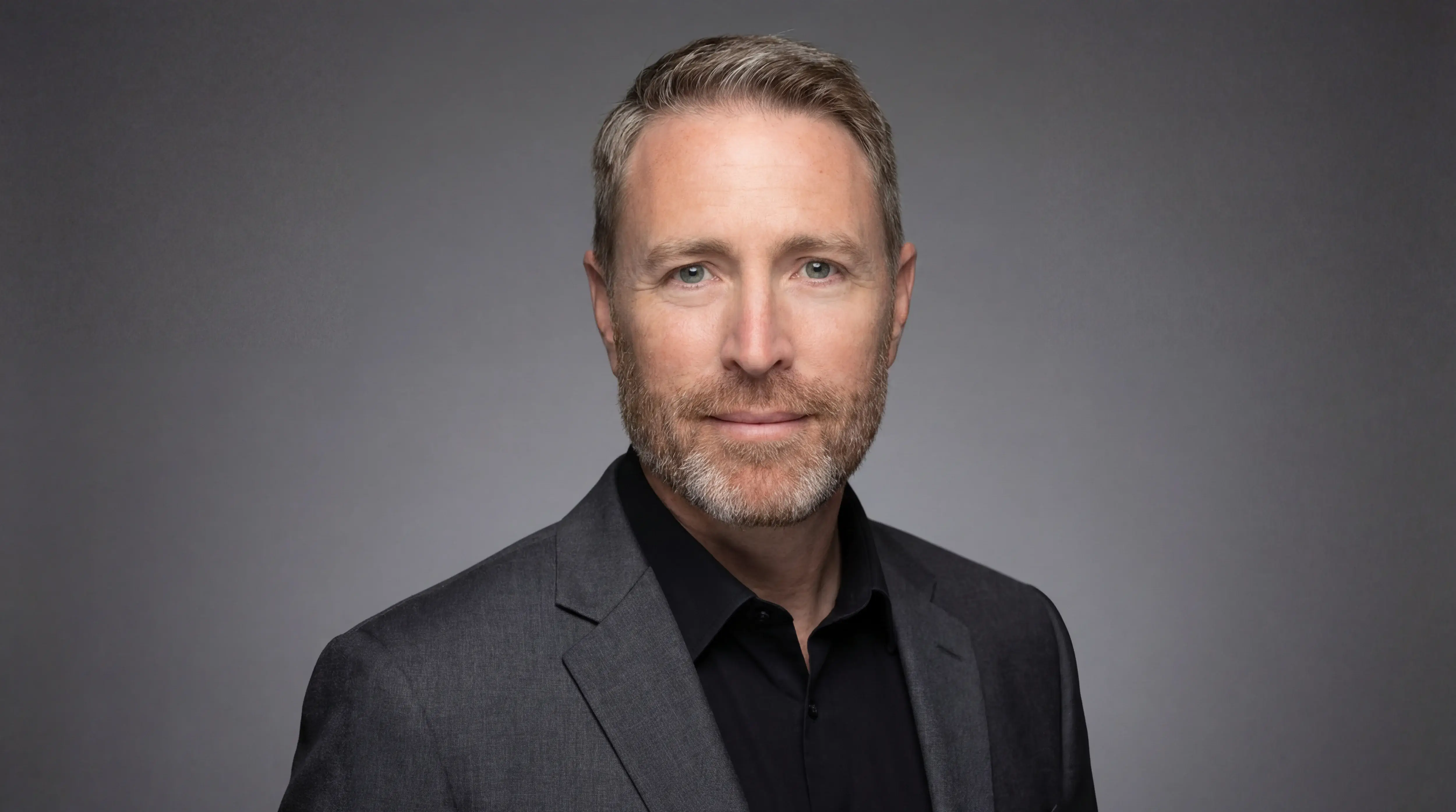 Michael O'Connor
Founder of Clarity Forge. 30+ years in technology leadership at Microsoft, GoTo and multiple startups. Passionate about building tools that bring clarity to how organisations align, execute, grow and engage.