Addressing Ambiguity
Even after reaching agreements with stakeholders on project goals or success criteria, gaps often remain between your understanding and what your customers, managers and team members envision.
September 3, 2025
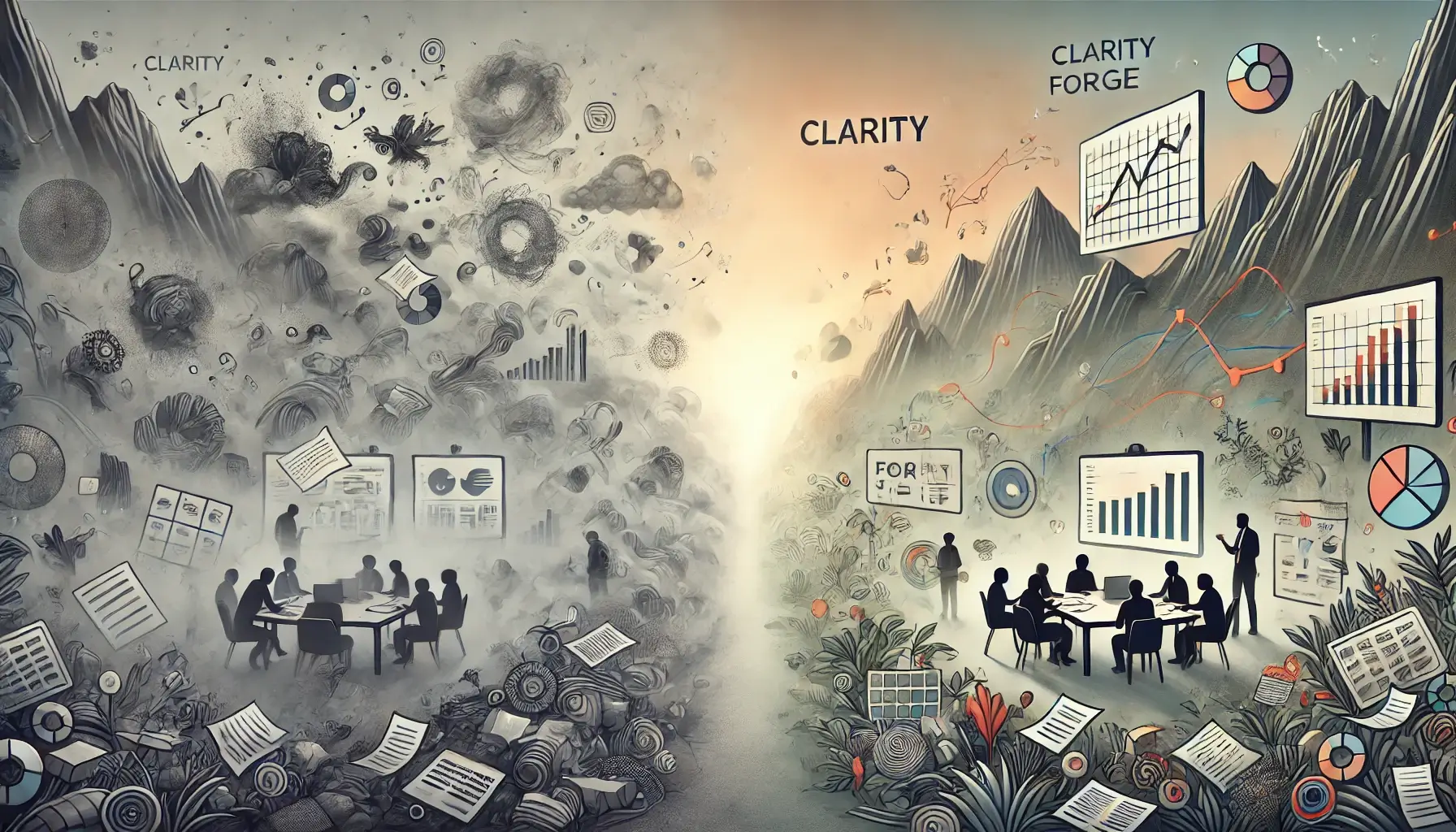
The beginning phase of a project is often filled with excitement. You’re faced with an interesting problem, a fresh team, a multitude of ideas, and at this stage, no one is running late, yet. However, as time progresses, that initial enthusiasm can wane. One of most common reasons this happens is due to, you guessed it, a lack of clarity.
Even after reaching agreements with stakeholders on project goals or success criteria, gaps often remain between what you believe you agreed on and what your customers, managers and team members all believe you agreed on. It is just not possible to eliminate all ambiguity, ambiguity that can lead to misalignment and frustration.
While it is important to enforce agreements and avoid scope creep, it is perhaps even more vital to address ambiguities as quickly as possible. Misunderstandings or unresolved assumptions can easily derail even the best-laid plans. So with that in mind, here are a few best practices you can use to identify and tackle ambiguity head-on.
By focusing on eliminating ambiguity, clarifying expectations and validating assumptions, you set the stage for a smoother and more successful project journey.
Identifying Ambiguity
Start by pinpointing areas where ambiguity is most likely to exist and where disagreements could cause the most significant issues. You probably have an intuitive sense of where to start - scope you just haven't been able to wrap your head around or deliverables that make you uneasy because you just know there will be conflict. Don't avoid those conversations, prioritise them! Acknowledging these issues early is critical, and you'll get a lot of credit if you're the person willing to start important but potentially uncomfortable conversations.
To successfully ferret out ambiguity, you need to encourage everyone on the team to help. No one wants to be the one that highlights thorny issues or asks silly questions, so make it clear that tackling ambiguity early on is something that will be celebrated, even if it's just formally articulating something that might seem obvious.
Identifying Assumptions
Confusion and disagreement often stem from unspoken, undocumented assumptions, even over things that seem to be quite obvious. I once had a serious disagreement with a client over the definition of "minimal viable product", which he believed to be a product that was mature, sophisticated, well tested and well polished.
With that in mind, here are a few examples of categories where assumptions might have be made on your project :
- Features: Which browsers and devices will we support, both for desktop and mobile? Are any platforms excluded?
- Dates: Is the completion date defined as the point when the code is complete, beta testing starts, or the product is released?
- Team Commitment: Are all team members fully dedicated to this project, or are they balancing other commitments?
- Priorities: Is the top priority to meet a deadline, deliver the full scope or stay within budget? What ranks second?
- Quality: Are we optimizing for speed and cost, or are we aiming for a more polished, durable solution?
- Project Management: How will we share status updates? Who needs to be informed, who needs to sign off? How frequent should updates be?
- QA: Who is responsible for testing the solution?
Breaking Down Deliverables
Large tasks are often home to quite a few assumptions, so review your larger deliverables - even those that you think are straightforward - and break them into smaller tasks. For example, if a deliverable is expected to take two weeks, outline the specific steps required and estimate how long each step will take. This exercise often reveals hidden complexities or dependencies that may otherwise go unnoticed.
Risk Driven Scheduling
Always tackle your most complex deliverables as early in the project as possible. It's amazing how many questions become obvious the moment you sit down to implement something, so even when you are confident everyone is on the same page, it's useful to schedule the completion of complex, risky work early on in the project. Think of it like assembling furniture: ensure all the pieces are correctly placed before tightening screws or hammering nails. Resolving ambiguities upfront minimizes costly adjustments later.
Steps to Ensure Clarity
To recap, here are actionable steps to address ambiguity in your projects:
- Identify Ambiguity: Highlight potential gaps in understanding or agreement.
- Identify Assumptions: Discuss and document unspoken or conflicting expectations.
- Break Down Deliverables: Divide large tasks into smaller, clearly defined steps.
- Risk-Driven Scheduling: Prioritize complex or risky work early in the project.
- Resolve Early: Prioritize tackling ambiguities during the planning phase.
- Foster Collaboration: Create an environment where ambiguity is openly addressed.
By focusing on eliminating ambiguity, clarifying expectations and validating assumptions, you set the stage for a smoother and more successful project journey. Every moment spent addressing ambiguity upfront saves time, frustration and resources down the line.
Our mission is to empower organizations by fostering cultures of clarity and transparency, engagement and collaboration. Through innovative tools, best practices and partnership with leaders, we strive to unlock the competitive advantages inherent in healthy organizations.
Stay in the loop
New frameworks, articles and guides — straight to your inbox.